How does LED work?
LED (Light-emitting diode) are an excellent source of low voltage light that requires little energy. However, they require a stable voltage source current (DC) in order to function effectively.
Individually, each LED requires 2-4 volts and according to its specifications, a few hundred mA. LEDs can be placed in series (in a light bulb or lamp, for example), which requires a higher voltage.
LEDs must be protected from fluctuations in voltages to prevent these fluctuations to cause a change in the intensity of the emitted light. Excessive current will produce increased brightness, but also a higher temperature and thus an accelerated deterioration of the LED.
Stable Current
To ensure a stable current, especially in applications with batteries where voltage fluctuations are constant, the majority of LED lighting is designed with a driver. Some drivers provide a constant voltage, while others maintain a constant current, protecting LEDs from overload, thus ensuring consistent performance and increased durability.
Attenuate your LED using a dimmer
An interesting feature of LEDs is that they can be attenuated using a dimmer. Take note: Not all bulbs or LED lights are compatible with dimmers. The main reason is that the function of dimmers is opposite to that of the drivers, namely to change the brightness of the LED.
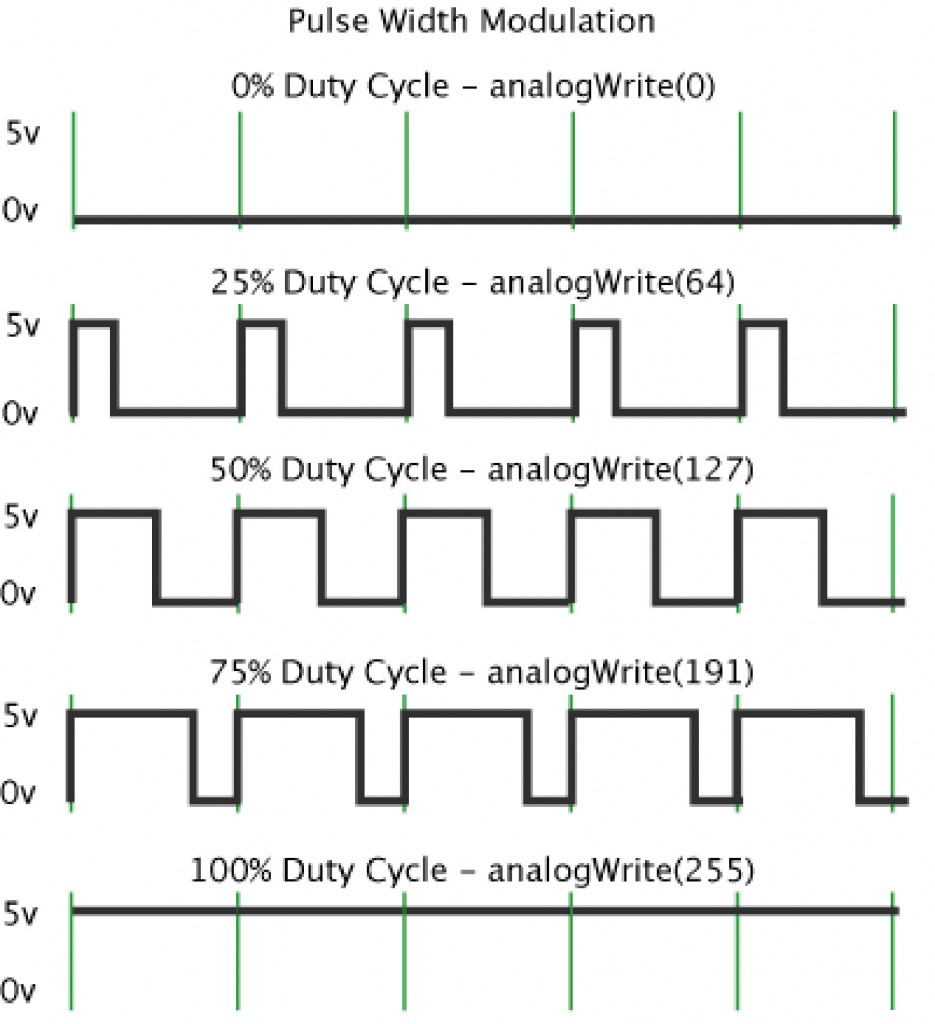
The majority of dimmers operate on the principle of PWM (Pulse Width Modulation). In short, it's like turning on and off the LED very quickly at a high frequency, imperceptible to the naked eye, giving the impression that it illuminates less strongly.
In fact, it illuminates less at a time ... This method allows to maintain a steady voltage and current while varying the perceived brightness.